Skating, Stick Handling and Decission Making

I continue with some valuable things from Dave Smiths lecture, from the international hockey coaching seminarium.

He talked about the complexity in hockey, you need to skate, do stick handling and take decissions, which is not possible if you haven’t automized some of the skills or moves. If your skating isn’t automized, you need to focus on that and loose stick handling and good decissions (or you do stick handling and loose your movement / skating)

If you don’t have good automized skating skills, you will have problems with the game. 1. Quick and fast feets / skating (coordination skills)
2. Good stick handling skills will automatically give you more time on focusing on the game itself and to make good decissions during the game.

Test the footwork and coordination skills

You can test these coordination skills by a simple hockey off-ice practice. Let your players run standing on the same spot, add stick handling and start to ask them questions. Do they drop in speed or have problems performing these two things together, then you know you need to work extra either on footwork / skating or stick handling. Below an example from the stick handling and puck control eBook found on this page >>
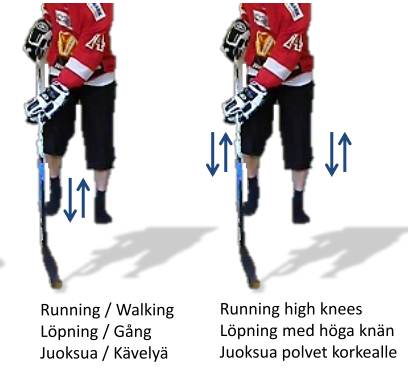
Hockey stick handling excercise / drill / practice

Repetitions are the magic ingredient in hockey practices, 10 000 Hours – 10 years

A number of studies have shown that it will take ten thousands of hours to become a master of what you are doing or 10000 repetitions to automize a skill. This will apply for leadership, professional hockey players, floorball, work, hobbies etc. Each of us has the potential to master what we are doing, but it will require time, 10000 hours, or about ten years, if you really want to be the best in whatever you do. But too many of us don’t commit to the things we are doing, well enough, but we still hope to be the best or recognized, sometimes we give up too early, wondering why we never become the best.  “I was a great talent, when I was young…” Ever heard that?
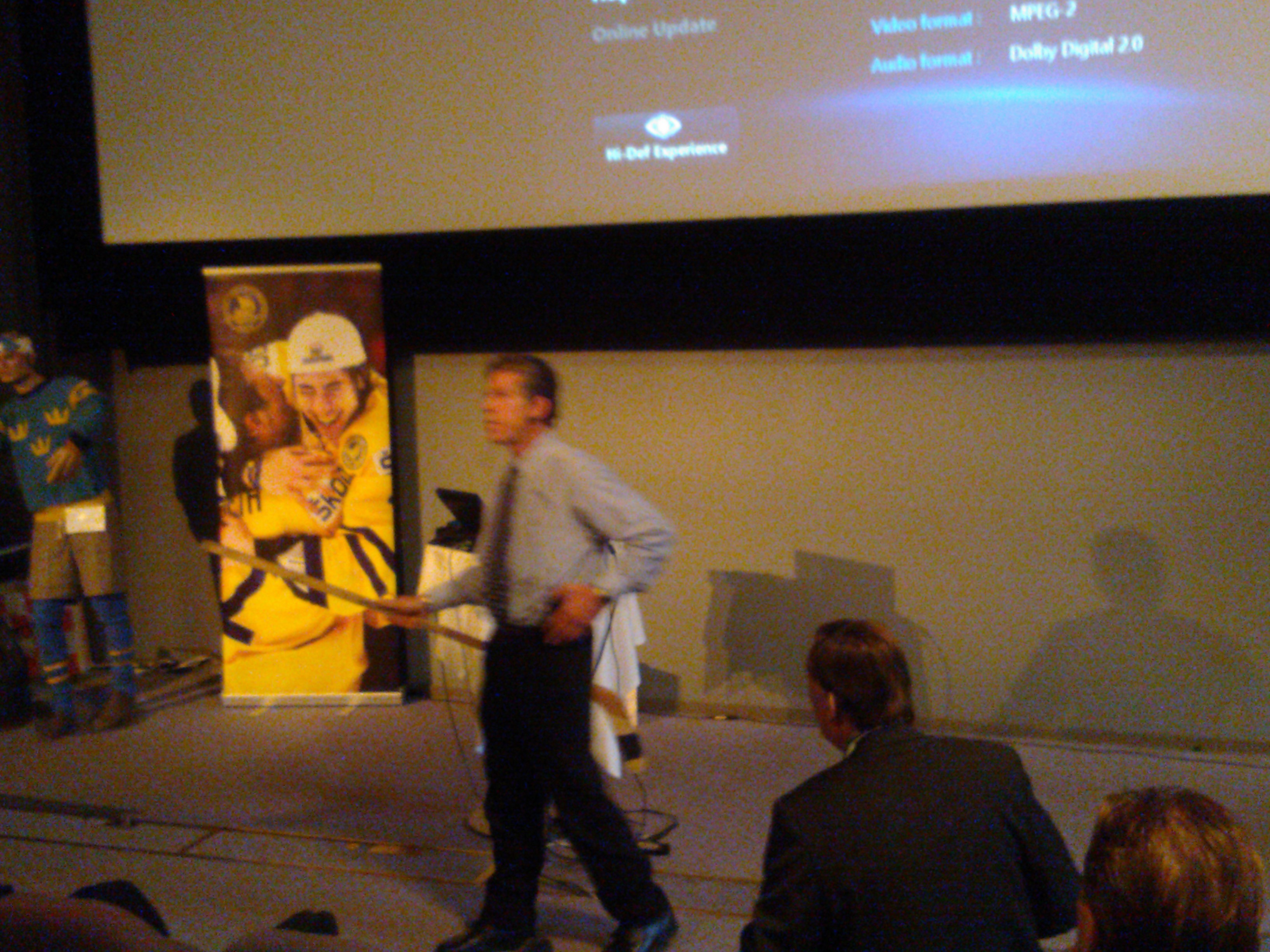
Dave Smith, NHL Hockey Officials Health and Wellness Coach

During the International Hockey Coaching Conference, we had the opportunity to listen to David T. Smith, the NHL hockey officials health and wellness coach.

Dave Smith NHL Official Health and Wellness Coach

The NHL officials Health and Wellness program >>

National Hockey League Officials Fitness and Conditioning

  • This is a sample program for NHL Officials. As all people are different so are Fitness Programs, the following is used as a guideline with minimum standards for NHL Officials.
  • Consult your family doctor before starting any training program

Off season training

  • Start by setting some fitness goals for the start of the next season and focus on those throughout your program.
  • Incorporate and maintain good eating habits such as frequent small meals rather than a few large ones so your body is burning calories all day. Maintain a balanced diet between carbohydrates, fats and protein.
  • Incorporate a stretch and exercise routine before every training session.

Schedule

  • 5 days a week / Up to 2 hrs a day
  • Strength twice a week
  • Aerobics twice a week
  • Run, bike, roller blade or other activity once a week

Strength

  • Weight training utilizing a variety of programs with changes in repetitions, sets, tempo and exercises.
  • Push-ups using varying arm position and use of blocks
  • Sit ups, crunches – proper form is very important
  • Leg Strength (lunges, squats, step ups)

Aerobics

  • Use heart rate monitor to maximize training zones
  • Run – 15 min increasing to 60 min.
  • Ice sprints – 30 sec increasing to 60 sec.
  • Bike – 35 min increasing to 60 min.
  • Roller blade or Stairmaster
  • Jump rope and plyometric exercises with Resistance Bands to increase foot speed and agility

Cardiovascular Exercise (Run, Bike, Stepper or Glider)

  • Warm up (5 min)
  • 1 minute increasing intensity intervals for 30 min in your target heart rate zone
  • One minute work, one to two minutes rest intervals
  • Lower the intensity if you are not recovering to your original Heart Rate after first work/rest interval
  • Cool down (5 to 8 minutes)
  • You should monitor Heart rate at all times

Maintaining fitness during the season

  • 15- 20 minute warm up before games
  • Light jog, bike or jump rope to warm up muscles and joints and increase Heart Rate
  • Stretch and flexibility as a daily wellness program
  • Aerobic Exercise 2 or 3 times a week on non game days
  • Strength and Resistance exercises are done as travel and game schedule allows. Maintaining a base throughout the season will allow an easier transition into the off season training program and helps promote an overall healthy and productive lifestyle.

The program is picked from the NHL officials page >>

Dave Smith, NHL-official coach

Hockey 4-1 System / Set Up Russia

I wrote earlier about the Swedish 2-2-1 set up and quite aggressive forecheck, if you then look at the World Champions in hockey Russia, you find almost the opposite, very defensive 4-1 or V set up. When the forecheck is started they have almost a 2-2-1 set up, that is transferred to a wall or trap when they stop the attack from the opposite team. Not maybe fully transferrable to floorball, but I hope this post still will create some thoughts outside the box…

Russia 4-1 system, set up, tactic in Hockey / Floorball

Hockey Game Tactics Sweden

In the International Hockey Coaching Education, during the World Championships in Sweden, we had the opportunity to listen to the Swedish National Hockey team coach, before each game.

“We want to play with full puck control / possession towards the offensive zone, and in the  offensive zone we try to go straight towards the goal, P1 goes in front of the goal and P2 seeks up the rebound area. We also try to stay in the way of the goalie and steer the shots. Other areas we focus on, are to “win the inside” in 1-1 situations. You can say that, the more skilled hockey players you have the less we talk about how, it’s more about what.”

Roger Rönnberg Swedish National Team Ice Hockey Sweden

/Roger Rönnberg, Swedish National Team Coach in ice hockey

Hockey Formation / System / Tactics

In the International Hockey Coaching Training, during the World Championships in Sweden, we also had the opportunity to listen to the Swedish National Hockey team coach, before each game.

Before the game against Russia, the team formation or system was discussed. Earlier Sweden have been playing 2-2-1 with defined or static roles, and with the mindset of putting pressure when the timing is correct. Since the statement “when timing is correct” can create confusion, he system has been changed, and the valuing part of “when it’s correct time” has been removed. Today Sweden play 2-2-1, but player 1 in top will always put pressure and the roles are flexible, the most offensive player will take the role of being P1 and the player that puts the pressure imediately, the other forwards will then adjust and take the two other roles P2 and P3.

Evgeny Malkin Russia, NHL, Pittsburgh Penguins against Sweden IIHF WC
Evgeny Malkin Russia (NHL Pittsburgh Penguins) vs. Henrik Zetterberg Sweden (NHL Detroit Red Wings)


Hockey Media Training

During the international hockey coaching training I attended, we also got some media training and some good advices regarding that. I will just keep this post short with some statements.

“You will never be a good friend with a journalist, you can have good contact, but never be true friends”

“You will never win against a journalist”

“Coaches that praise the other hockey team they have defeated, are also praising their own team”

“Be your self”

“Be open against the media, let them in. In NHL, the locker room doors are closed for 5 minutes after a game, then it’s opened up for media”

“In elite sports, media is your channel for visibility and from where you get most of your money… don’t forget that”

Sven Melander Hockey Journalist

/Sven Melander, Swedish journalist working for one of the largest newspapers in Sweden.

Hockey Goalie Trainer or Goal Scoring Coach, Part 4

…Hockey Goalie Trainer or Goal Scoring Coach, Part 4. In hockey, one of the teams in Sweden on elite level (HV 71) has created their own shooting center to improve the goal scoring and shooting skills… This is more common in USA or Canad, but quite unique in Sweden.

Speed Shooting Hockey during World Championships
Speed shooting, outside Globe Arena, during World Championships in Hockey.

Most of the teams also have special practices for the hockey goalies, during the weeks or months, but this hockey team also have special practices for goal scoring.

During this hockey shooting or goal scoring practice, the rink is divided into two areas, one for the offensive hockey players and one for the defensive players. Each zone has four hockey drills running at the same time.

Hockey Forwards

1. Skating in from the border “Shoot in the middle of the step”
2. Pass from one side, shoot directly at the other post
3. 2 vs. 0 – rebound – Shot from defensive player
4. Goalie freezed in right position, player tries to find the spots to score goal, by looking at the angle of the puck (or eye of the puck).

Defensive players

1. Pass vertically and a shot.
2. Pass from corner to a defensive player skating towards the goal, shot.
3. Pass from the “pocket” (along the border), and shot.
4. A forward in front of the goal hold the stick up from the ice for shot on goal, or on the ice to make the defensive player to shoot for stearing the shot.

So, what if, we would put in as much effort as in training the hockey goalies, to score goals and improve the shooting skills in hockey, we would have really good goal scorers and snipers in many hockey teams. Maybe we should also focus on hockey goal scoring coaches / trainers?

This is the end for this theme, will be starting up a new one…

Hockey Goalie Trainer or Goal Scoring Coach, Part 3

…Hockey Goalie Trainer or Goal Scoring Coach, Part 3 Looking at goal scoring, shooting skills and hockey practicing focus, you could say that much of the focus is today on, taking rebounds in front of the goal and creating a mask, traffic or wall in front of the hockey goalie to reduce the visibility, when the shot comes.

This will be important in future, but increased training focus will need to be on shooting skills and in scoring goals, with different types of shooting techniques like:
– Wrist shot
– Snap shot
– Slap shot
– Backhand
– Shooting unannounced and in movement sideways
– To be able to shoot with the weight (centre of gravity) on both feets, left or right (the foot that is in front).

“In NHL the shots will not come through if you don’t shoot fast and quick” /Dave Smith, NHL officials health and wellness coach

If you want to see some examples from hockey you can watch Alexander Ovechkin and Phil Kessel. Ovechkin example, start at 00:44, goal scoring skills in practice.

Topic to be continued…

Hockey Goalie Trainer or Goal Scoring Coach, Part 2

…Hockey Goalie Trainer or Goal Scoring Coach, Part 2. If you look at the Nordic countries in ice hockey most of the teams and hockey players are very skilled when it comes to stick handling and skating, but there is lack of good goal scorers and skilled shooters, why? (of course with some exceptions)

This is simply a result of practicing focus, in USA and Canada a lot effort is put in this area in hockey practices, shooting and goal scoring, while in Sweden and Finland other areas are prioritized.

In the end it doesn’t matter how skilled you are with the puck, what counts is the amount of goals scored in a hockey game.

Of course the first step is to:
1. Create goal scoring opportunities (You need to be a good skater and a stick handler to create these goal scoring opportunities in a hockey game)
2. Score goal
3. Defend your own goal


I think a lot of focus in hockey is already put in area 3. Defend your own goal, and then 1. Create goal scoring opportunities, but what can be improved is, 2. Score goal when you have the chance.

“I will get ready, and perhaps my chance will come” / John Wooden

To be continued…

Hockey Goalie Trainer or Goal Scoring Coach

You can have a Head Coach in hockey, assistant coach, defense coach, goalie trainer and other coaching or support functions around the hockey team, but who is the hockey goal scoring coach or trainer?

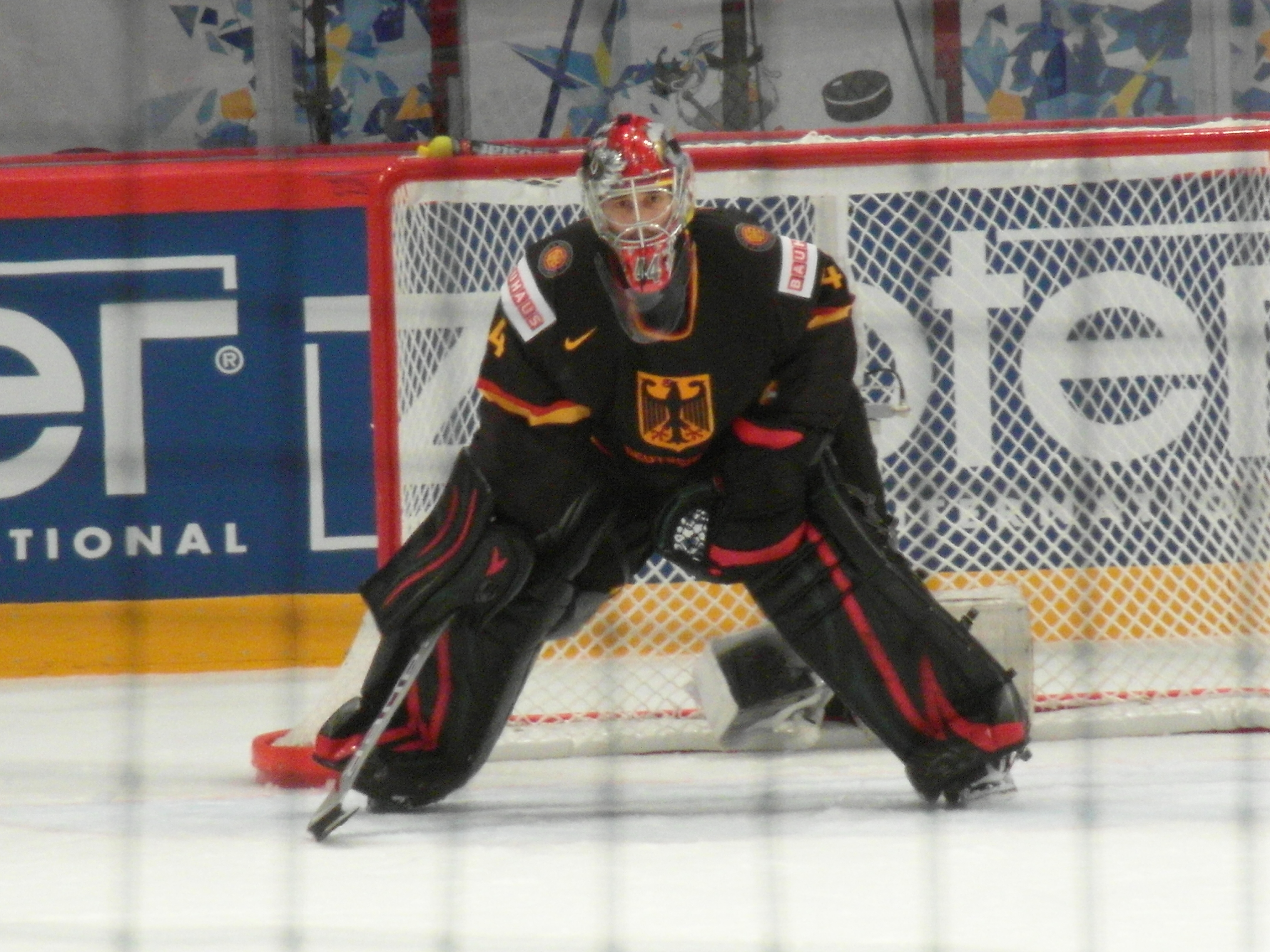
Dennis Endras Goalie Germany / HIFK Hockey World Championships

This subject was discussed during the International Hockey Coaching Symposium I attended during the World Championships in ice hockey in Sweden / Finland, together with all the Swedish Elite hockey coaches.

Torgny Bendelin, a famous Swedish hockey coach talked about this topic. Hockey on elite level is changing, the game is faster, harder, quicker and the time players have to make their decissions is reduced to a minimum.

In hockey a lot of time has been put in to develop the defensive systems the teams are using both on National and International level and of course a lot of efforts to improve the skills of the goalies, with help from special goalie trainers. The goalies are good in positioning and working with different angles towards the shooter.

Therefore the hockey players need to:
– Shoot quickly or quicker than before
– Shoot with precision
– Shoot hard/fast
– “Hide” the shot
– Shoot unannounced

These are the areas you also need to practice if you want to be a good future goal scorer in hockey.

This topic will continue in later posts…

Tomi Roukala #47, Porvoon Hunters – Titaanit (Kotka) Suomi Sarja 2012

Tomi Roukala scored 2 goals and got 3 assists in the hockey game in Suomi Sarja (Finland League) between Porvoon Hunters and Titaanit from Kotka. He was also rewarded as the best player in the game.


Hockey set up / system 2-2-1, 1-2-2, 1-3-1 and 2-1-2

Hockey game systems and hockey set ups like 2-2-1, 1-2-2, 1-3-1 and 2-1-2 are basically only visible when the hockey team has lost the puck and changed from attack to defense, or are just changing from defense to attack, that will say in a fast counter attack in a hockey game.

I will add a few examples of the different hockey set ups, such as 2-2-1, 1-2-2, 1-3-1 and 2-1-2. The set ups can be played in many ways, for example, offensive, defensive, and right or the left-weighted.

Systems can also vary depending on the hockey team, coaches, players, their competence or skills level and their given roles, so for an example a 2-2-1 hockey set up found on this page does not need to be the same as how all hockey teams and coaches will play the 2-2-1 set up, these are just my examples.

Images are marked with green areas, the plan is to win the puck primary in that area. Red areas represent dangerous or game system / design / set up weaknesses.

I will also add various openings / break outs in hockey, or the small golden details which will help you break the different hockey systems, if you can’t wait you can purchase the drills 😉

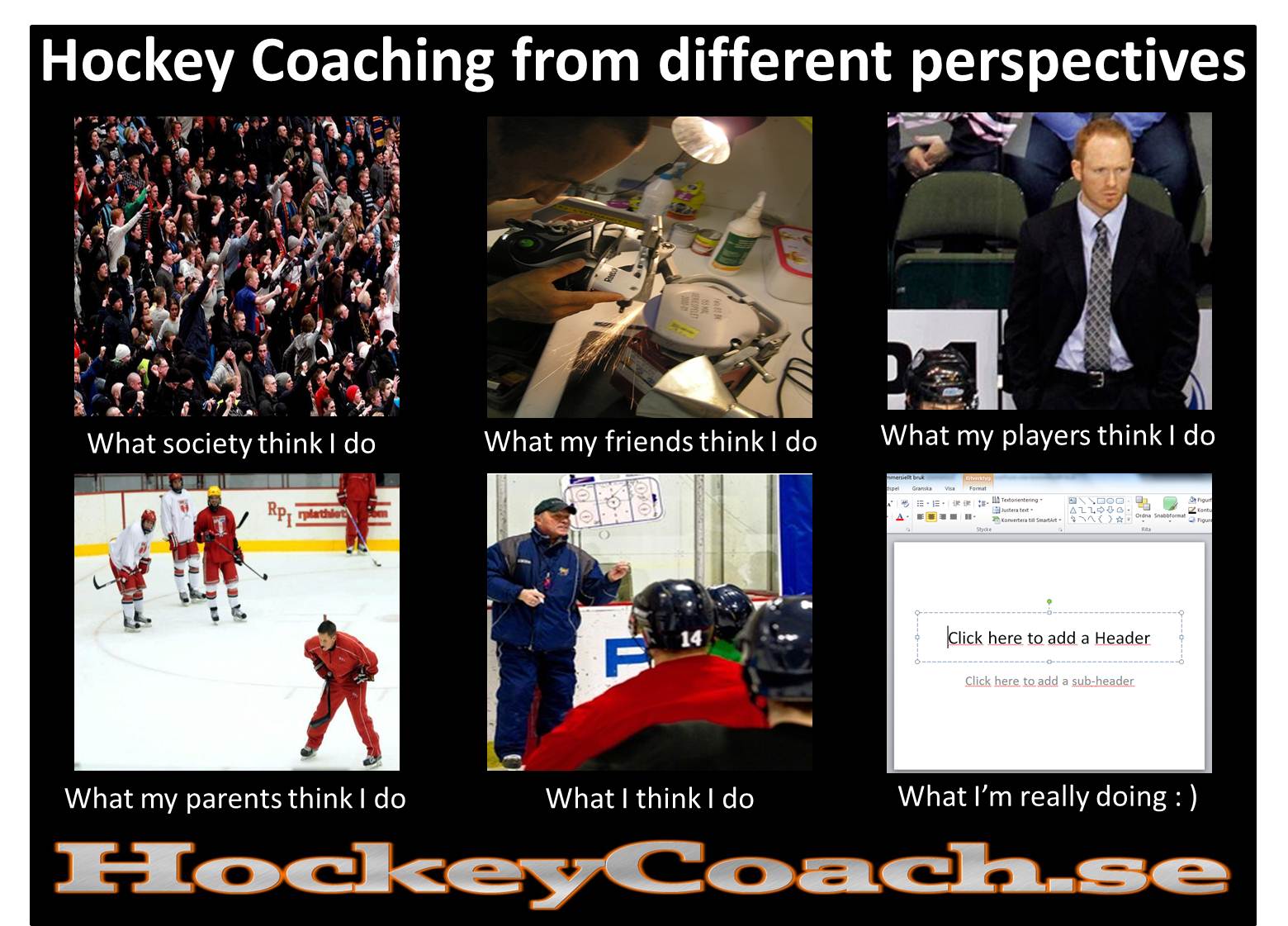
Hockey Coaching from different perspectives

Have you ever thought about how the hockey coaching role is seen from different perspectives? …Not? I have and these are just my personal thoughts… 🙂

Hockey, Coaching, Coach, Perspective, Parents, Society, Friends, Players, I, You, Do